I’ve spent the last 12 years working in agency SEO, and if there is one thing that keeps coming up—usually from a client who has been reading too many "SEO hacks" blogs—it’s the question of image alt text. They want to know: "How many keywords should I pack in there?"
My answer is always the same: Don't stuff it. Describe it.
Living and working in Belgrade, which has quietly become a massive hub for technical SEO expertise, we see the results of "lazy" on-page SEO every day. Whether we are handling a massive e-commerce site or a localized corporate portal, the principles remain identical. If you are doing on-page SEO, you aren't doing it for a bot—you are doing it for a user who needs context.
The Core Purpose of Alt Text
Before we talk about keywords, let’s clear the air. Alt text (alternative text) exists for two primary reasons: accessibility for screen readers and search engine crawlers that can't "see" images. If you are stuffing your alt text with keywords, you are failing both the visually impaired user and the search engine's intent.
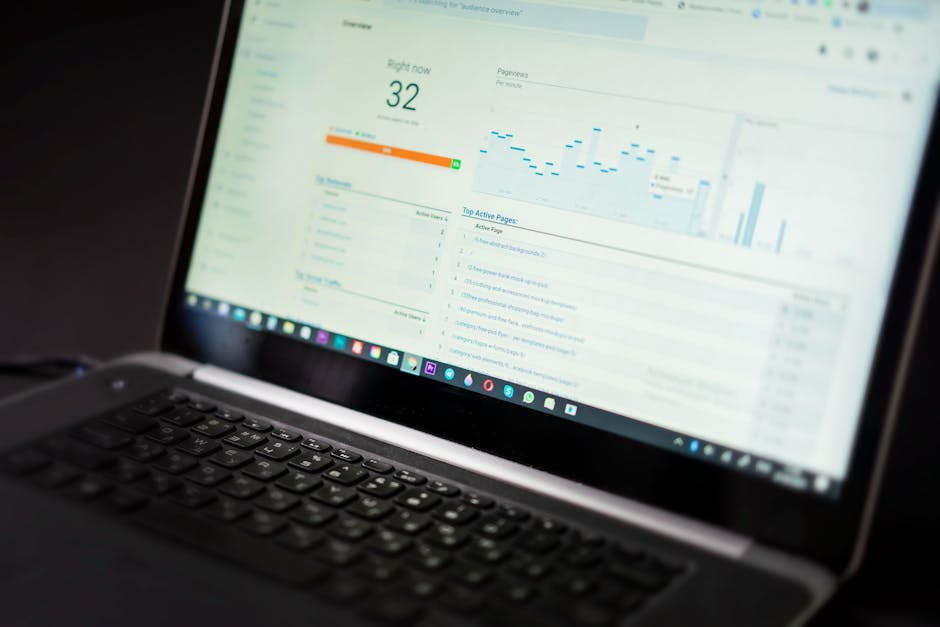
What changed on the site that week? That’s my standard question before I look at any traffic drop. Usually, it’s not the algorithm; it’s a developer moving a block of code or an automated plugin wiping out your metadata. Always check your changes before blaming Google.
How Detailed Should Alt Text Be?
The sweet spot for alt text is brevity with high information density. You want to describe the image in a way that gives context to the page content. If the image is a product, describe the product. If it’s a photograph of a person, describe the action.
Consider the following comparison:
Scenario Bad Alt Text (Keyword Stuffing) Good Alt Text (Contextual) Mobile Phone Product cheap mobile phone best price android smartphone store Black Samsung Galaxy S23 Ultra seen from the front with home screen visible. Office Photo SEO agency Belgrade staff working Four Dots team members collaborating on a technical SEO audit in a Belgrade office.When we work with global brands like MobileShop.eu, we handle thousands of product images. For an e-commerce site, the detail should be specific: brand, model, color, and angle. Don't write a novel. Write do backlinks still matter 2024 a caption that tells the user exactly what they are looking at.
Image Optimization as a Technical Growth Lever
Image optimization is often the most neglected part of technical SEO. It’s not just about the alt tag; it’s about file size, file names, and lazy loading. I’ve audited large corporate sites where the technical debt was so heavy that images were slowing the LCP (Largest Contentful Paint) to a crawl. That is a conversion killer.
When you fix your images, you aren't just "improving rankings"—you are improving the core experience. That is measurable. When we handle multi-regional SEO, like our work with Orange Jordan, we have to ensure that images are not only tagged correctly but also localized. If the content is in Arabic, the alt text must follow suit. Context matters.
The Link Building Connection
People often forget that good images are link bait. If you have unique, high-quality images of your office, your data visualizations, or your products, people will use them in their own content. When they do, they are technically linking SEO case studies to your domain if you’ve set up your asset hosting correctly.
We use Dibz.me for our link prospecting. It’s a stellar tool for finding broken link opportunities or outreach prospects, but it’s also great for monitoring where your branded images might be appearing. If someone uses your graphic, ensure they attribute it. That’s link building, not just SEO.
How to Report on Alt Text ROI
Clients hate fluff. They don't want to hear "we boosted your visibility." They want to see the correlation between on-page improvements and traffic spikes. If I spend a week fixing alt tags across 5,000 product pages, I need to show the client exactly what that looks like.
We use Reportz.io to automate this. It takes the "work" out of reporting and puts the "value" front and center. I don’t want to hide the work; I want to show that by fixing 5,000 alt tags, we saw a 15% increase in image search traffic over 30 days. That is actionable data.

Common SEO Myths (The "List of Shame")
I keep a running list of myths I hear in pitch meetings. Every time a client says one of these, it’s a red flag that they’ve been listening to the wrong people.
- "Keywords in every alt tag will rank me #1": No, it will get you penalized for spam. "You only need to optimize the homepage images": Tell that to your product pages losing organic traffic. "Alt text is for Google only": Alt text is for human beings. Google just follows them. "I can just leave it blank": If it’s purely decorative, sure. If it’s content, you’re missing out.
The Belgrade SEO Hub Advantage
Why does being based in Belgrade matter? The SEO scene here is deeply technical. We aren't just pushing buttons in a CMS; we are working with complex frameworks, multi-language architectures, and performance budgets. We look at the site's ecosystem. When we manage a campaign for a company, we treat the site as a living, breathing engine.
Whether you are dealing with a small site or a multi-regional monolith, the rules for image optimization stay the same: descriptive, relevant, and technically sound. Don't overcomplicate it.
Summary: Actionable Checklist
If you want to move the needle on your on-page SEO, follow this routine:
Audit your images: Identify pages with high traffic but no alt text. Write descriptively: Use the subject, action, and object. Localize: If your site is multilingual, your alt text must match the language of the page. Compress: If it takes 5 seconds to load, the alt text won't matter because the user is already gone. Report: Use tools like Reportz.io to track the visibility increase post-implementation.Stop looking for hacks. Start doing the work. If your images aren't contributing to the user experience, you are wasting space. Fix the alt text, fix the speed, and stop worrying about "tricking" the search engine.